In Mende, the School of Education and the University of Montpellier Take Center Stage as the Presidential Election Campaign Kicks Off
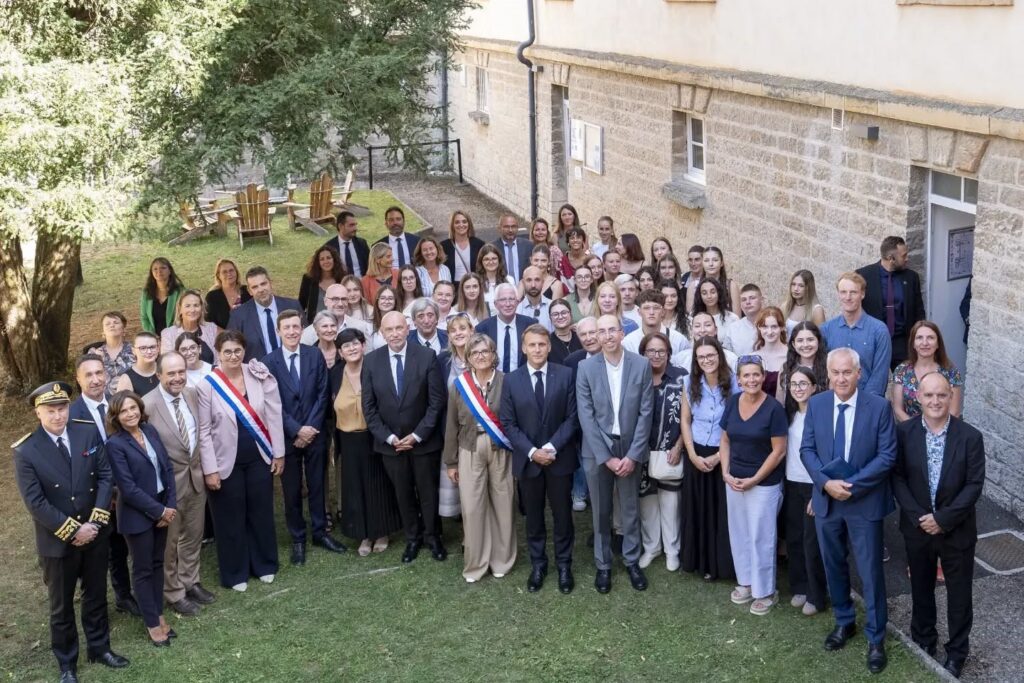
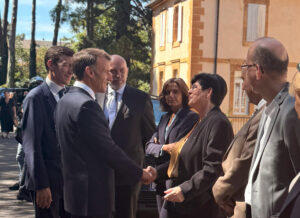
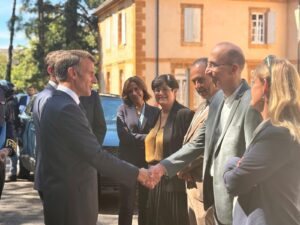
On September 1, to mark the start of the school year, the Mende campus of the University of Montpellier’s Faculty of Education welcomed President Emmanuel Macron and Minister of National Education Édouard Geffray. The visit focused on the reform of teacher training and the future of schools in regional areas.
After spending the morning at Chaptal High School in Mende to mark the start of the school year, Emmanuel Macron chose to continue his visit to the Mende campus of the University of Montpellier’s Faculty of Education. This was a particularly symbolic choice, as the start of the 2026 school year marks the implementation of the reform of initial teacher training and the new recruitment exam, which is now open to bachelor’s degree holders.
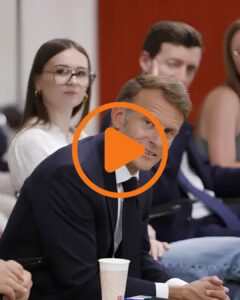
The President of the Republic met with students pursuing a path toward becoming elementary school teachers, including the first successful candidates from the new three-year post-high-school entrance exam. The discussions focused on their decision to become teachers, their university education, their gradual discovery of the profession, and the conditions needed to inspire and support those pursuing this career path.

Train teachers as close to the local communities as possible
This meeting also highlighted a key feature of the School of Education: offering accessible university education right in the heart of local communities.
In Mende, this program enables young people from the Lozère region to pursue their education without having to leave their department, allowing them to enroll in a university program that prepares them for careers in teaching. It thus helps create a seamless transition between the region where students receive their training and the region where they will eventually practice their profession.
In his remarks, Emmanuel Macron himself emphasized the importance of this model. In particular, he advocated for the development of university programs in cities that are not the “core campuses” of universities, arguing that these locations serve as a genuine “tool for regional planning.”
For the President, the university’s presence in Mende thus contributes to a form of “demetropolization” of higher education, allowing regional areas to also benefit from “brainpower” and high-quality educational programs.
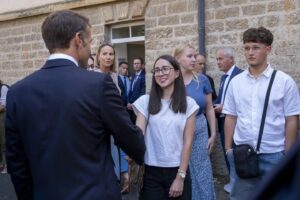


A university program that gradually prepares students for their future careers
The visit comes at a time of profound change in teacher education.
Starting this school year, the recruitment exam for elementary school teachers is open to candidates who have completed their bachelor’s degree. This new system is designed to allow future teachers to build their careers more gradually, with enhanced training at the master’s level and an earlier entry into the profession.
In Mende, this reform takes on a special significance: since 2019, the campus has offered a post-high-school academic program—the multidisciplinary bachelor’s degree in teaching, education, and training—which gradually prepares students for a career as elementary school teachers. The new Bachelor’s Degree in Elementary School Teaching thus builds on the work initiated by the Faculty of Education to support those pursuing teaching careers and to develop a university program that closely aligns with the needs of local communities.
This new program appears to be proving popular: at the Mende campus alone, more than 1,000 applications were submitted through Parcoursup for spots in the first year of the new bachelor’s degree program—a reported increase of 230 percent.
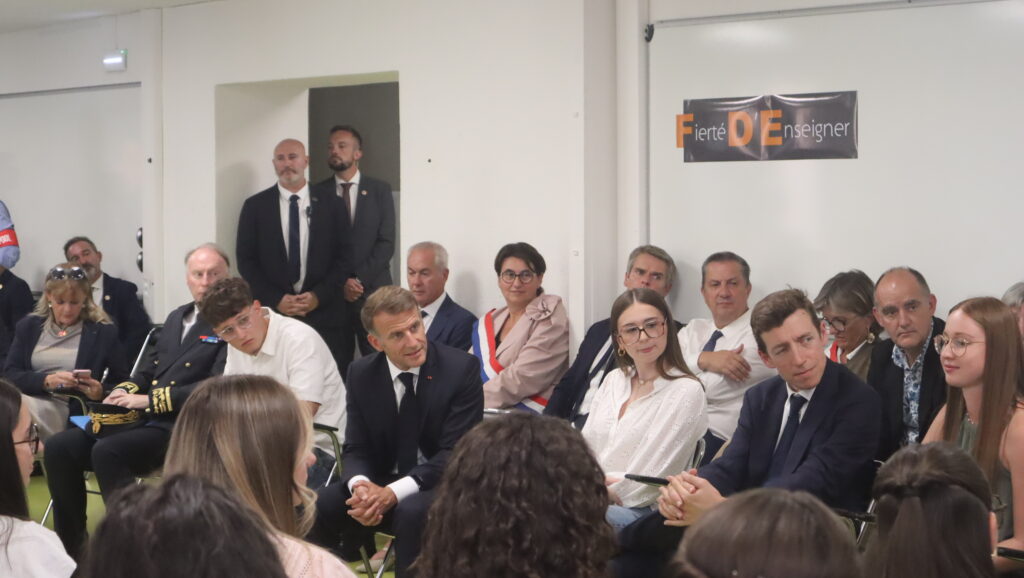
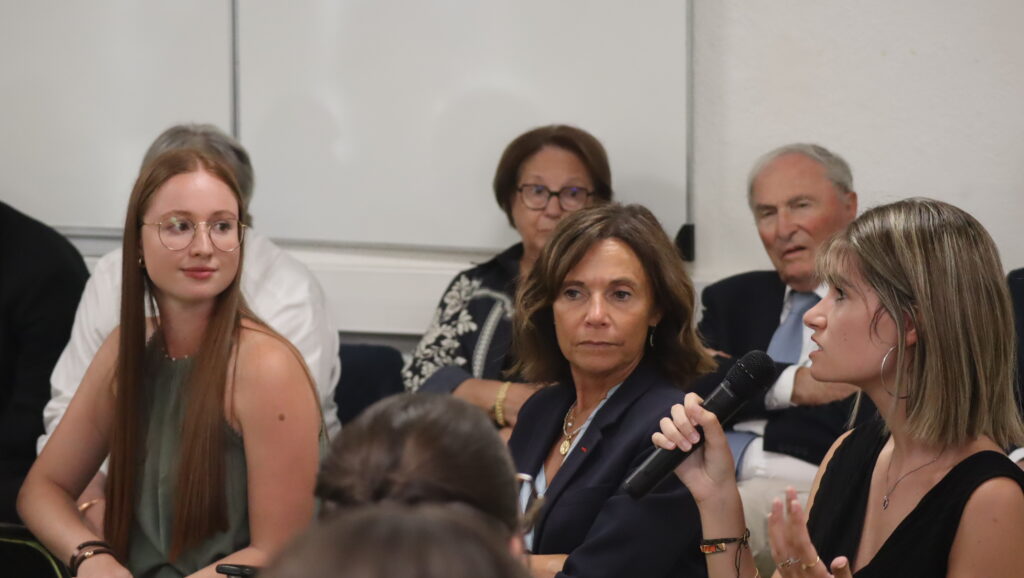
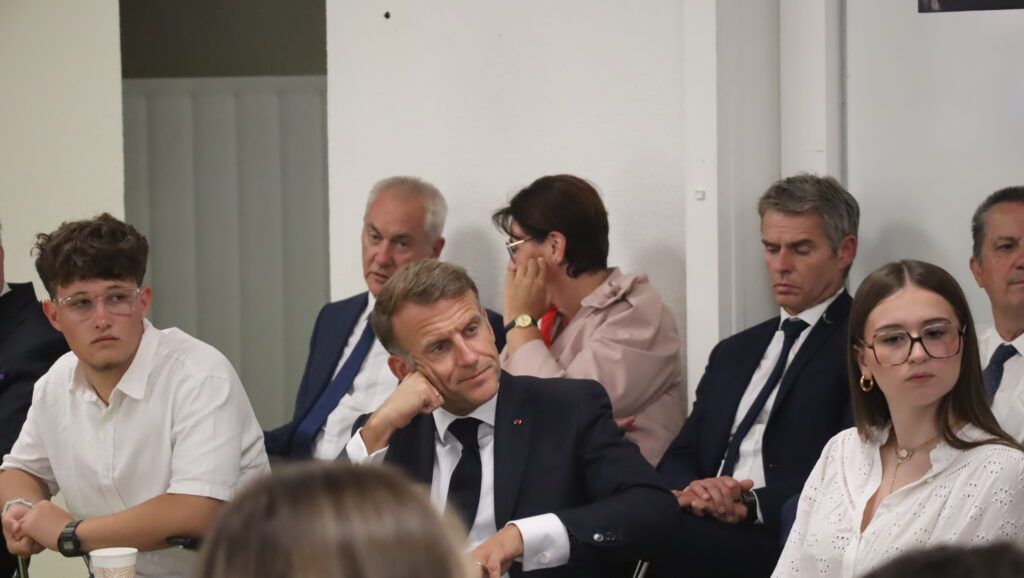
Students at the Heart of the Event
Beyond being a symbolic gesture of a presidential visit, the discussion session held in Mende above all gave students a chance to speak.
Their testimonials focused on the reasons that led them to choose a career as an elementary school teacher, as well as on the value of a multidisciplinary university education combined with hands-on experience in the profession.
The discussions also touched on international mobility and the opportunity for future teachers to complete internships abroad in order to learn about other educational systems and cultures.
All of these topics reflect an approach to teacher training that goes beyond simply preparing students for a certification exam: the goal is to gradually build a professional identity, develop an educational mindset, and prepare future teachers for the diverse situations they will encounter in the classroom.
"One of the most rewarding missions"
At the conclusion of his remarks, Emmanuel Macron addressed the students directly to commend their commitment to becoming teachers.
He emphasized the responsibility that comes with educational freedom and spoke about what their daily work will entail in the future: supporting students, imparting knowledge to them, developing their critical thinking skills, and building their self-confidence.
“For the sake of our youth and the future of the nation, we need fellow citizens who are willing to commit themselves to passing on our heritage,” he said, before describing this mission as “one of the most noble.”
This meeting thus served to highlight—beyond the current focus on reform—a core belief at the heart of the Faculty of Education’s mission: to train teachers wherever their calling arises, as close as possible to local communities, so that the university and schools can work together to shape their future.
In Mende, this ambition truly comes into its own.