
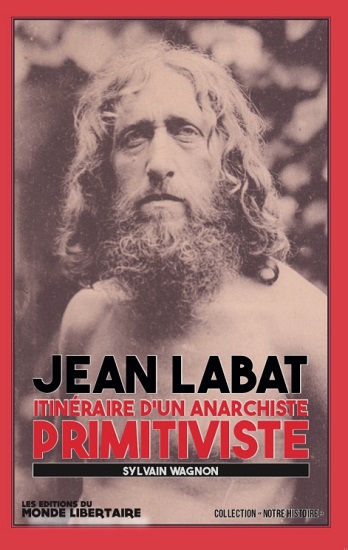
Jean Labat: The Journey of a Primitivist Anarchist
For most social revolutionaries, revolution boils down to overthrowing the intolerable status quo. The task of building a new world of freedom, equality, and mutual aid is put off until after the “great night,” when the future often looks bleak.
For some, however, while remaining active in social struggles, it seems essential not to wait but to begin experimenting with the future right now. Workers’ production and consumer cooperatives, libraries and courses of all kinds in labor centers, secular libertarian schools, free communities, and other agricultural communities passionate about returning to the land, vegetarianism, and naturism… are among them.
The history of the anarchist movement is marked by such practical alternatives, particularly in the early 20th century. This book tells the story of one of its key figures.
Jean Labat was born on February 28, 1882, in Béarn. His parents were farmers. After moving to Paris, he became involved with anarchist groups. He was active in the Anarchist Communist Federation and eventually became editor of the monthly *Le Réveil Anarchiste Ouvrier*, which was known for its intense anti-militarist stance. This led to Jean being sentenced to five months in prison in 1913. In 1919, he joined the naturist and vegan colony of Bascon (1911–1951) in the Aisne department. He was murdered there by his partner’s brother in 1938.
Long hair, a scruffy beard, a disheveled appearance, bare feet… he looks every bit the hippie ahead of his time. But his philosophy of life doesn’t prevent him from remaining a grassroots activist, like most anarchists.
As we can see, beyond the portrait of a “rank-and-file” member and his life in a “free milieu,” this book recounts a whole chapter of our history and that of those who seek to live out the social revolution in the present.
And it’s fascinating, especially since it’s not a eulogy. Just a few traces of beings in the realm of shadowed buildings!